

A workshop developed by Dorina Bencsics
Our Bethlen Square
Date: April 10, on the occasion of Earth Day
Location: Bethlen Gábor Square (Rain venue: Bethlen Square Theater)
Duration: 90 minutes
Target Audience: Ages 6–12 (school and kindergarten groups)
Program Leader: Dorina Bencsics
Participants: 12 Children Age: 8-14
Focus: How do children perceive the park in front of the Bethlen Theater?
During the session, participants are not merely passive observers but active shapers of their environment. Through playful community planning, children step into the shoes of various living beings and users to map out the square’s features, using artistic tools (painting, collage) to create their own “green vision.”
Workshop Structure (60 minutes)
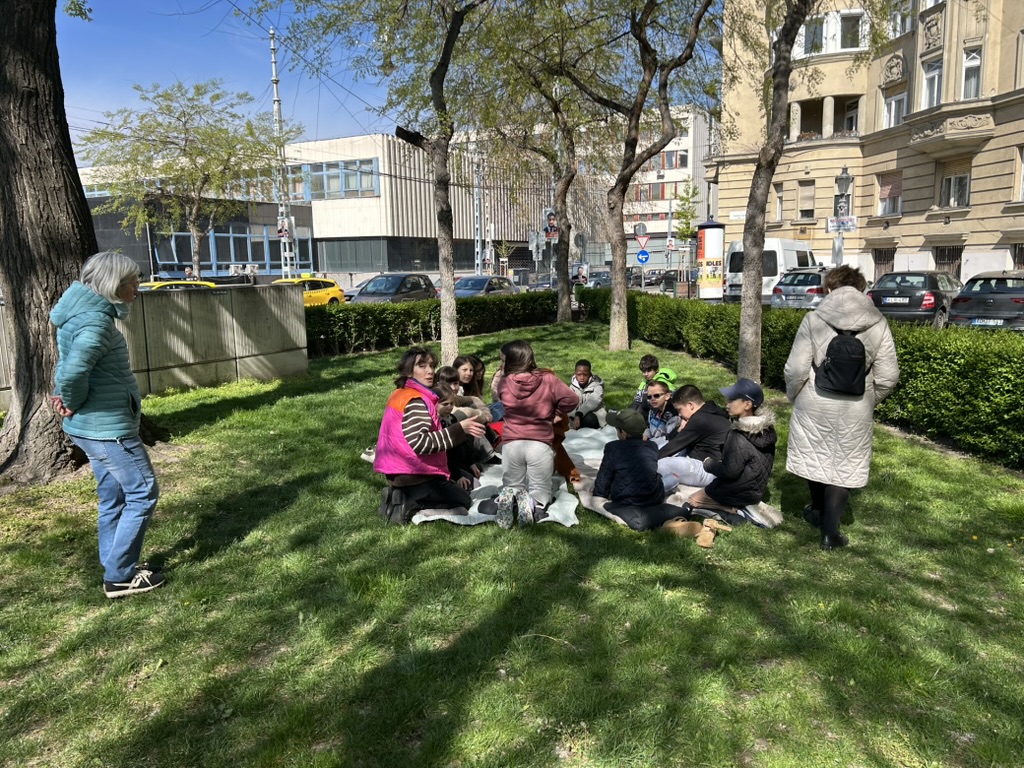
- “Space Inspection” (15 mins)
An interactive walk and sensitization. We get to know the “inhabitants” of the square. Children learn that the space is a living fabric where every tiny detail plays a vital role. - Community Planning in Mixed Groups (35 mins)
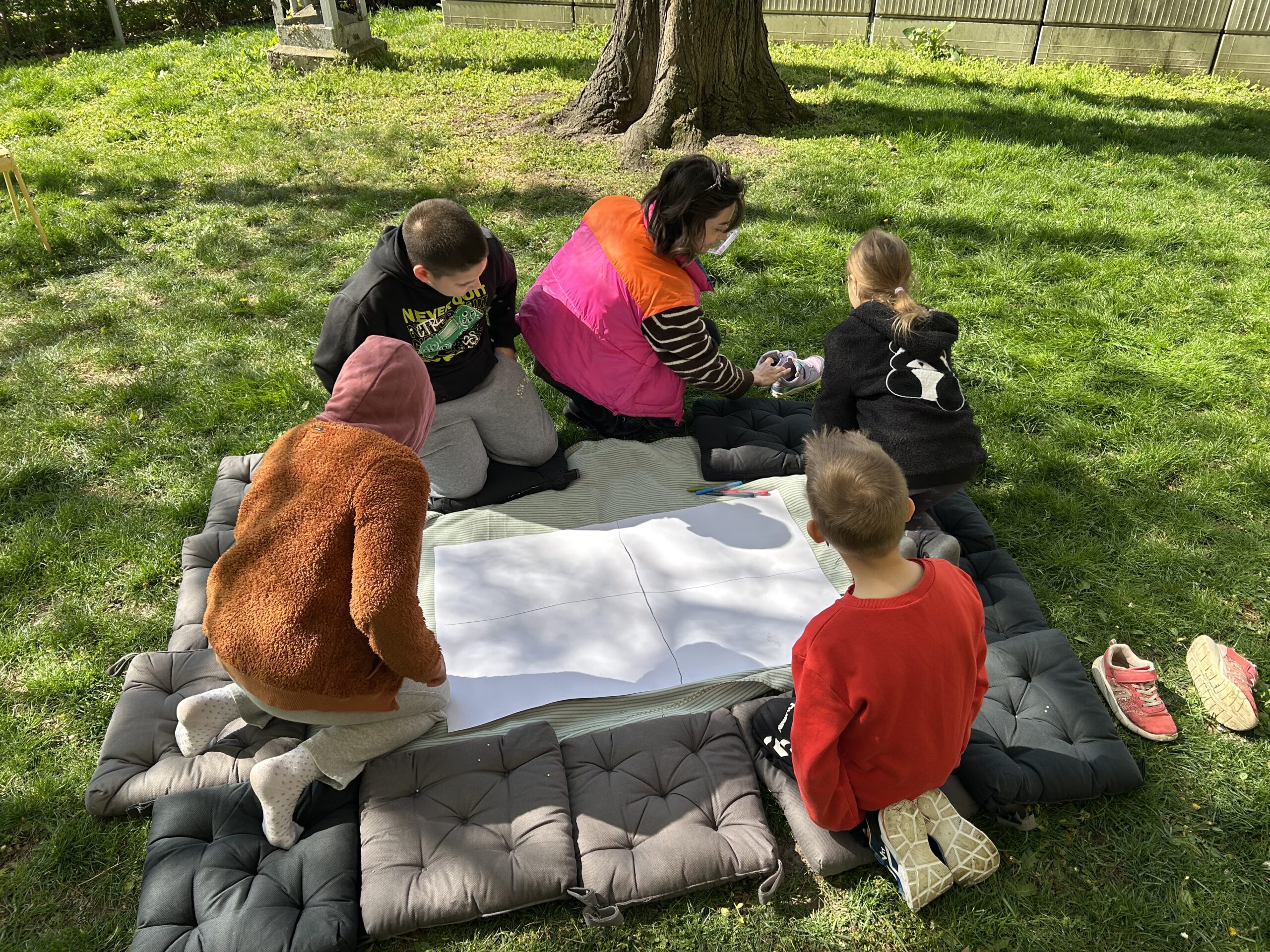
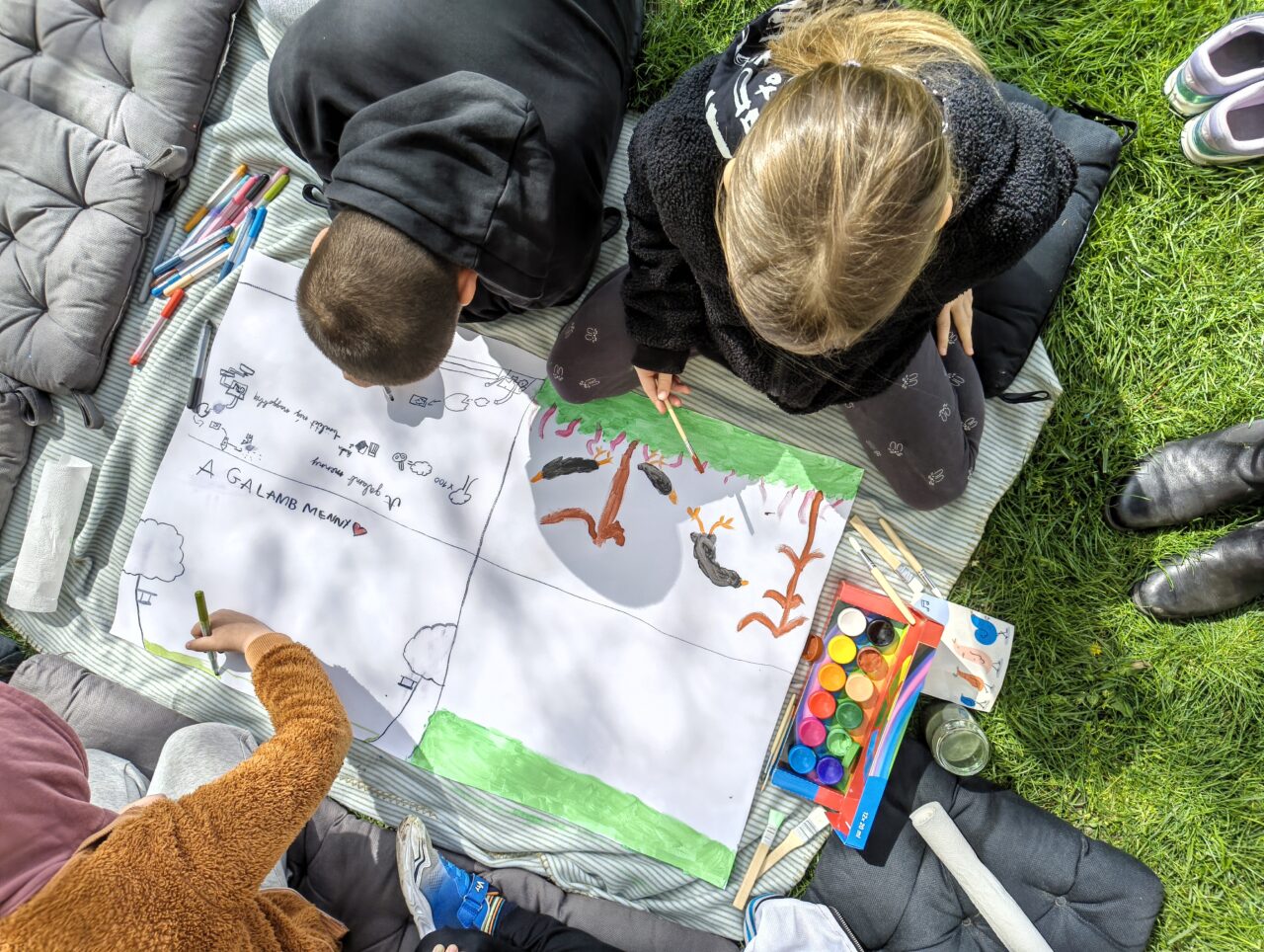
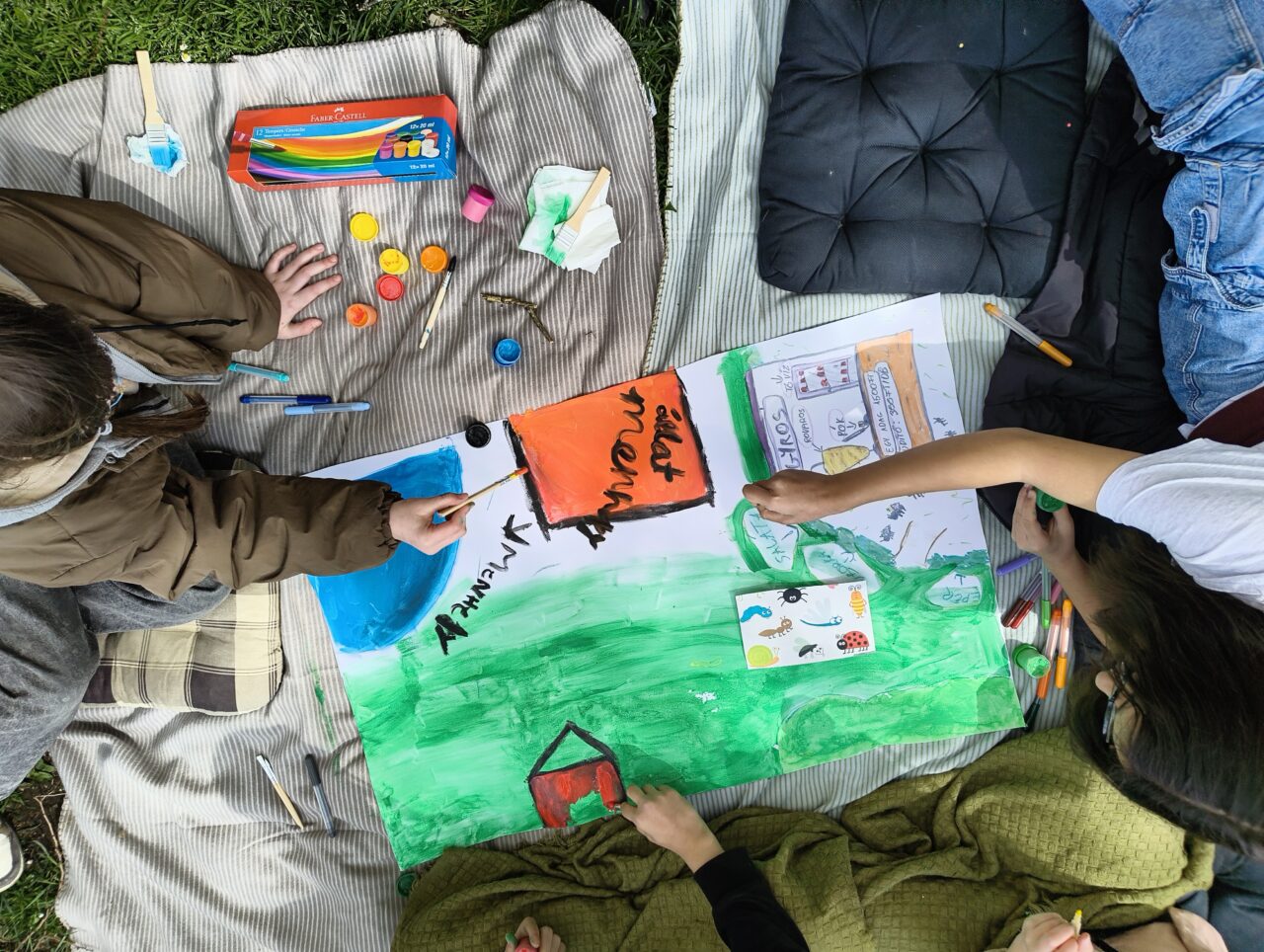
The task is to create “Future Maps.” Children are divided into teams of five. Each team member represents a specific role and interest during the planning process (e.g., insect, plant, bird). Throughout the process, I support the children with guiding questions. - Presentation (10 mins)
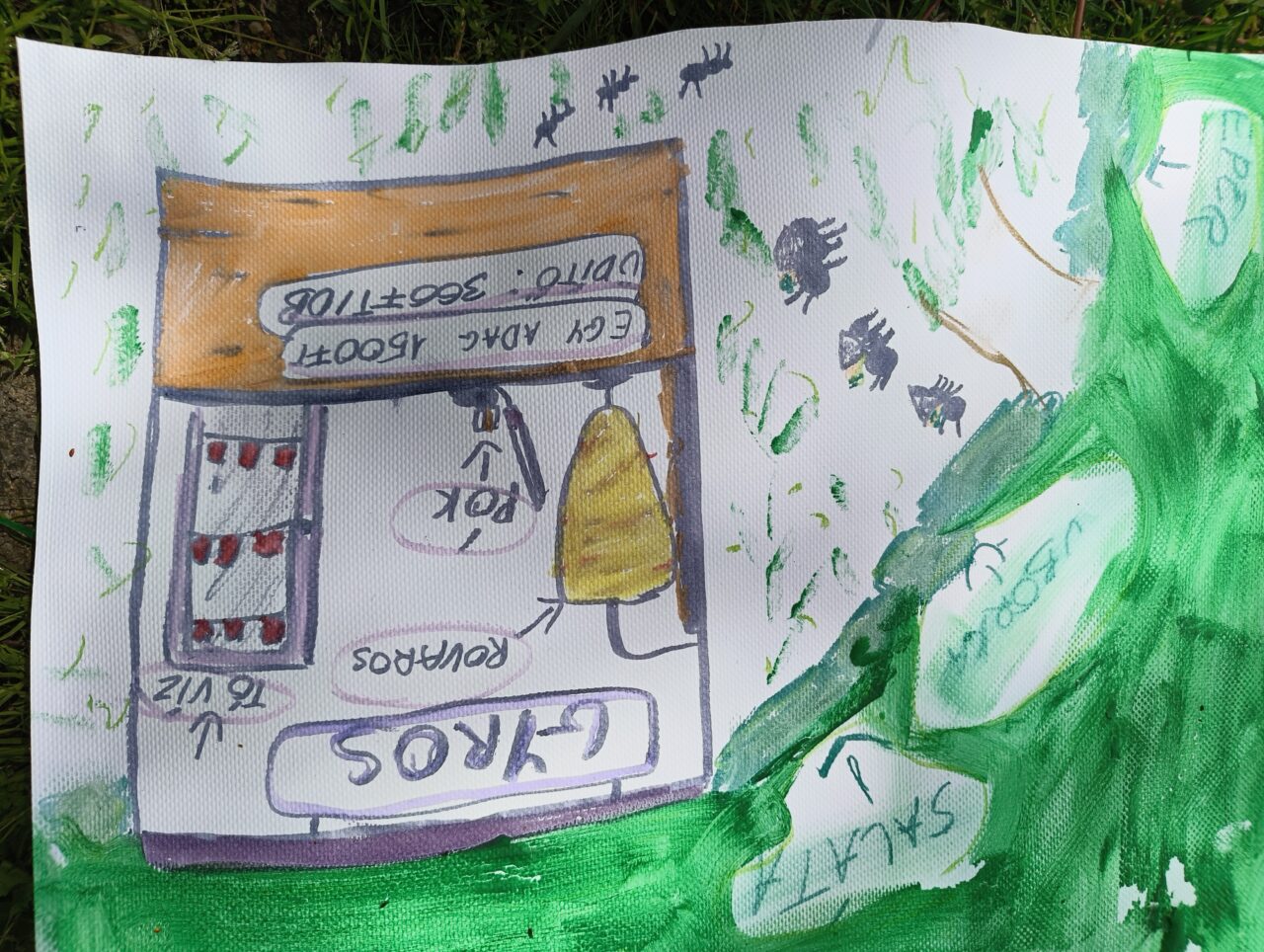
Groups present their finished works. During the presentation, each child argues for their collective solutions from the perspective of their chosen role (e.g., as the square’s bird or tree), strengthening empathy and systems thinking.
The final designs will be exhibited at the PLACE project presentation, featuring a list of all creators and participants.
Teachers’ Guide / Pedagogical Goals
- The Message of Earth Day: The central goal is to make children realize that protecting the planet begins in our immediate environment (our neighborhood, our local square). They learn that sustainability is not an abstract concept but the art of coexisting with nature.
- Systems Thinking: By representing different roles (bee, tree, bird), children recognize the interconnections between living beings and the vulnerability of the ecosystem.
- Social Competencies: Through group work, they develop their ability to advocate for interests and find compromises (democratic planning).
- Creative Self-Expression: Using visual tools (painting, collage), they can formulate their desires and ideas freely and without constraints.
Reflection and Summary: “Our Bethlen Square – Ecosystem Designers”
On the occasion of Earth Day, twelve primary school students became active shapers of Bethlen Square during our 90-minute community design workshop. The goal of the session was for the children to become not just observers, but “ecosystem designers” of their own environment, using artistic tools to articulate their visions for the park’s future.
We launched the process with a focused icebreaker: participants introduced themselves by stepping into the roles of living beings whose names started with the same initial as their own. We continued activating the senses with a collective “rain game,” where rhythmic noises and sounds made with our bodies immediately evoked natural associations. Since the message of Earth Day was already familiar to them, this shared knowledge grounded a deeper, systems-thinking approach to the topic.
During the project presentation, I outlined the essence of the PLAC initiative: artists and professionals working together to transform Bethlen Square into a vibrant, inclusive community space. I asked the children to dream freely, but I supported the complexity of the design process with a creative “twist”: they had to examine the square from the perspectives of specific personas – birds, insects, and humans.
During the “site inspection,” the groups gathered impulses through five minutes of intense observation (walking, running, listening). This was followed by 40 minutes of creative work: they recorded their “future maps” on 50×70 cm canvases using paint and markers. Although not all the participants knew each other beforehand, the shared language of creation helped bridge initial difficulties. To support the groups, I provided guiding questions: “What do you need at night if you are a little bird? What do you see from high above? Where would you feel safe if you were a dragonfly? How many friends can a ladybug live with? In what kind of place would you like to talk with your friends after a difficult day?”
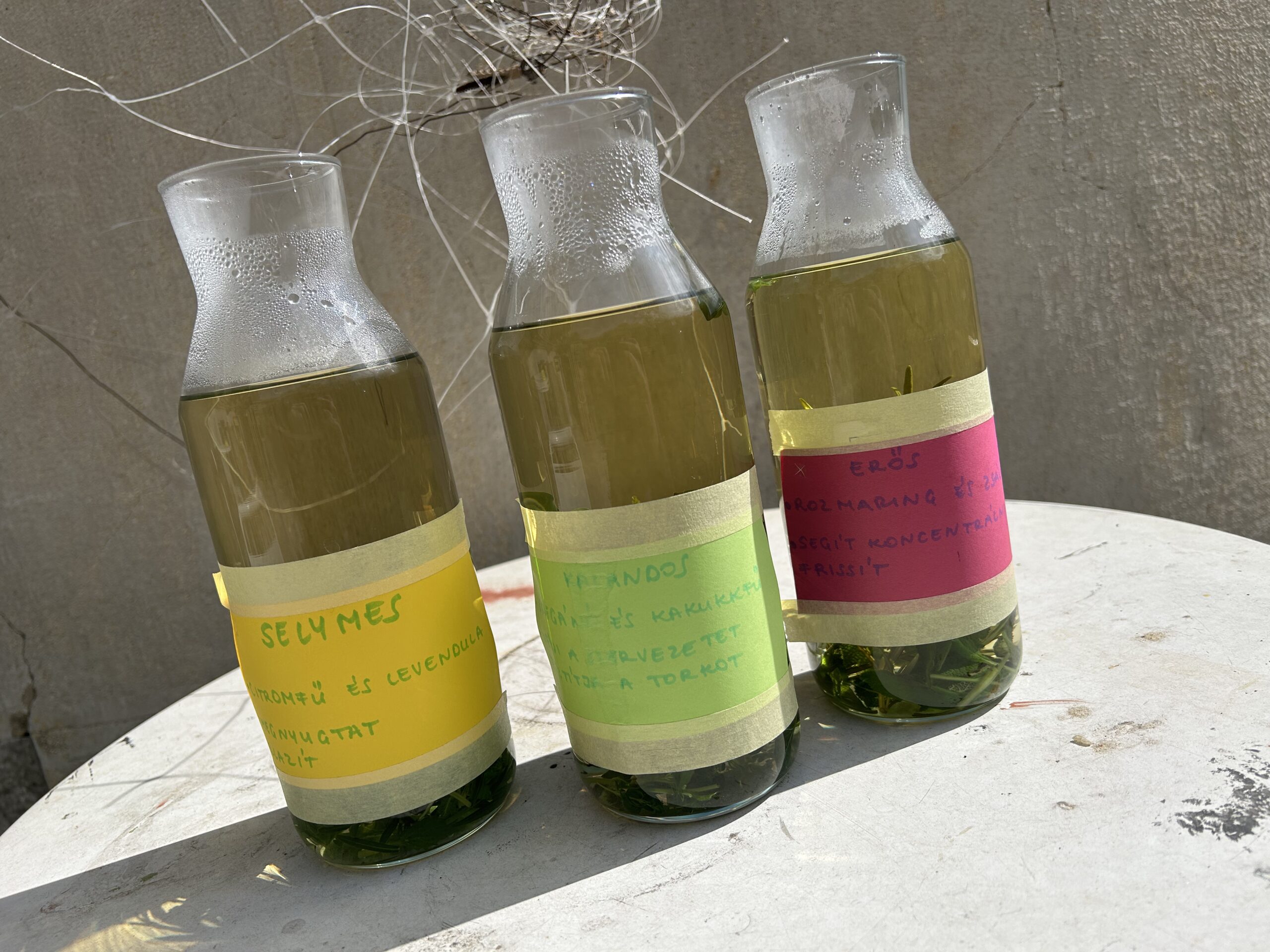
Before the closing presentations, each group shared their unique vision. It was particularly instructive to see that while the older children supported their solutions with arguments, the youngest – though exhausted by the end of the process – still shared their valuable ideas through a spokesperson. We concluded the workshop with a herbal tea session, which provided a space for reflection and processing the shared experiences.
Professional Recommendations for Development:
- Timeframe and Rhythm: For greater depth, a format of 3×50 minute blocks is recommended (either over several days or with longer breaks). This allows for deeper reflection and prevents fatigue in younger children.
- Accessible Toolkit: In shorter timeframes, replace painting with “low-fidelity” techniques: use pre-cut icons, collage elements, stickers, or sidewalk chalk. This removes the “I can’t draw” inhibition.
- Conscious Group Dynamics: Aim for true vertical integration (mixed age groups), where older children take on a “mentor” role to help younger ones articulate their ideas.
- Ritual Conclusion:The tea session can play a key role, where flavors and scents become part of the sensory design of the space, helping to activate multiple senses and fostering a deeper understanding of the plants
- Impact Measurement and showcasing children’s visions: Presenting the artworks to the local community and decision-makers. This dialogue creates an opportunity to integrate children’s perspectives into the long-term development strategy of the square, ensuring that their ideas can evolve into tangible, scalable elements in the future.
- Prototyping in Space: If the location allows, use natural materials (branches, stones) for 1:1 scale marking in the square alongside 2D drawing, so children can physically experience the proposed changes.