

By Michael Helland
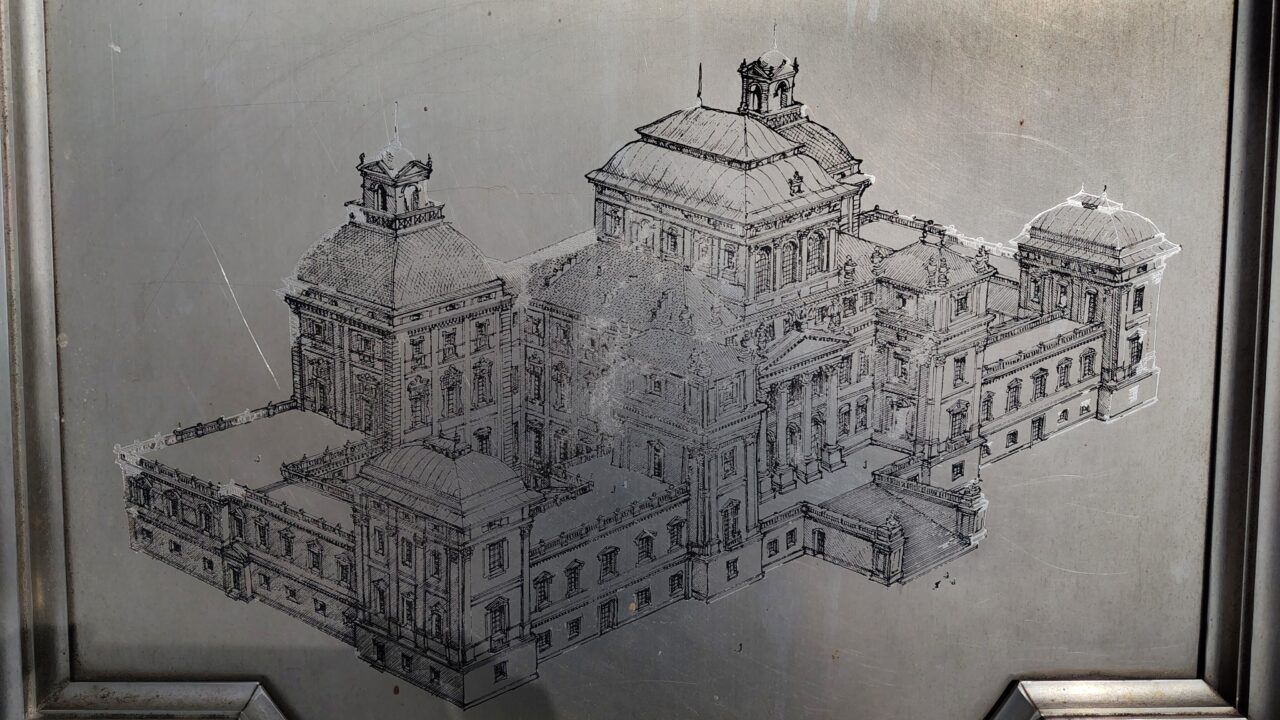
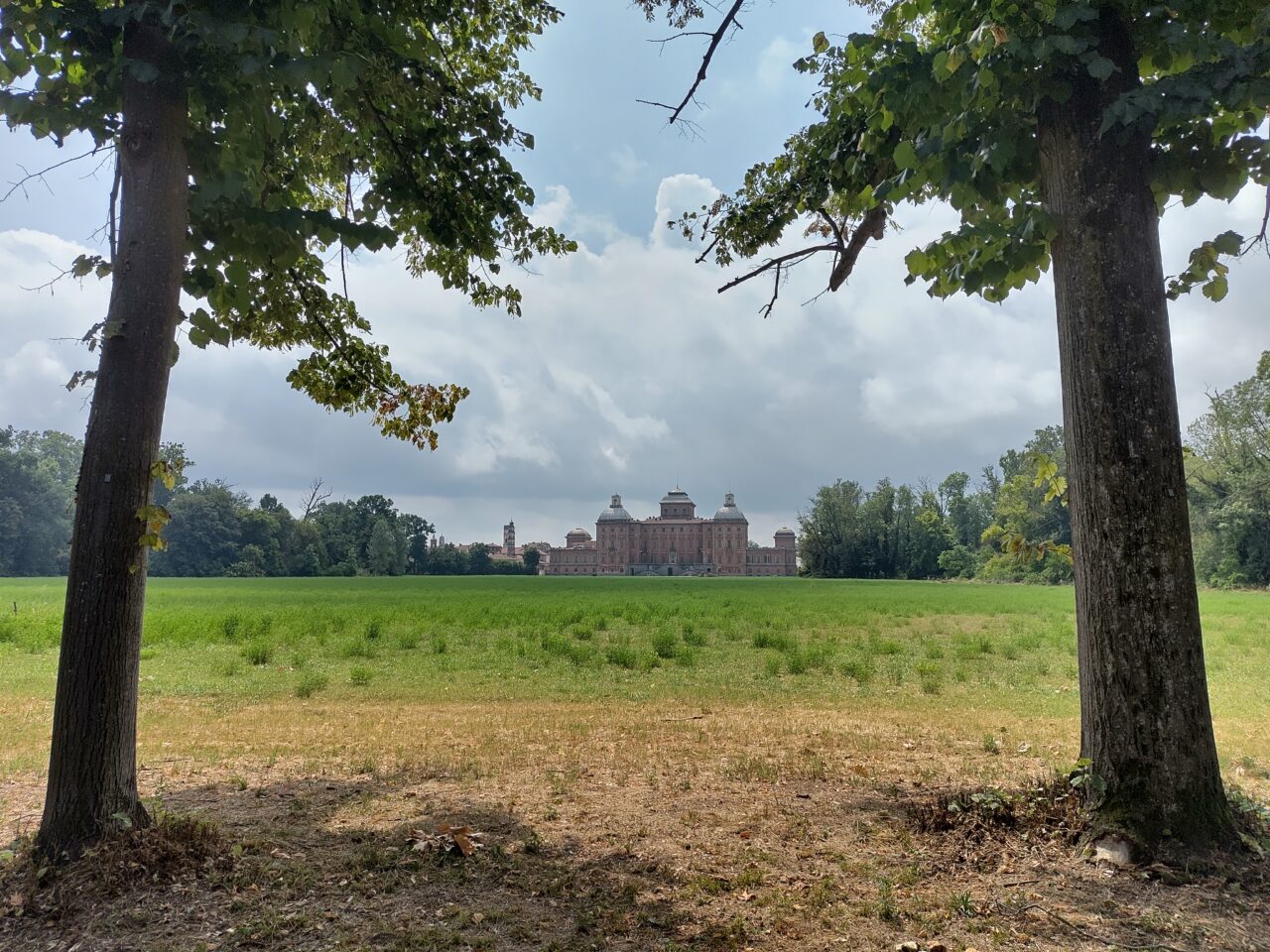
For the April 2026 closing event of the PLACE pilot project in Italy I was excited to return to where it all started, to the iconic Racconigi Palace, where we spent the first full day of our Creative Camp last August. As I recall, we received a whirlwind introduction to the aesthetic worldview and philosophy informing traditional Italian, French and English garden designs, followed by a guided tour to discuss the perpetual challenges of high-maintenance high-ambition landscape designs. The former glory of Racconigi’s gardens as a legacy cultural flagship has been overshadowed by extensive phases of neglect and under investment, and today we are left wondering if a hybrid status as an ecological preserve will lead to a more sustainable future? To be sure, the PLACE artists seemed much more excited for the emergent anarchic body of the park, with greater passion for a future that will be wild!


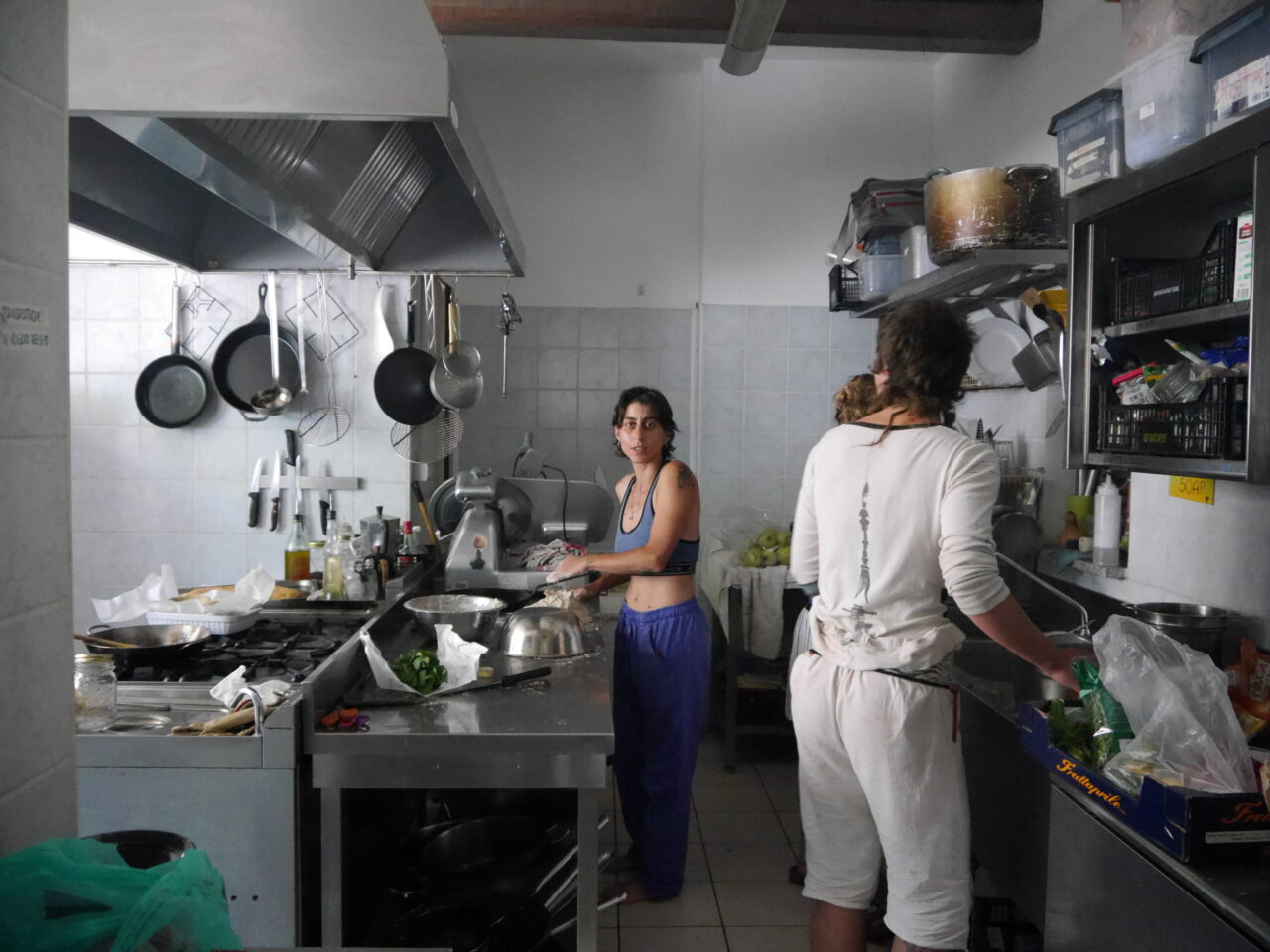
The PLACE closing event was anchored by two formal events, one for local stakeholders and another for the wider public, and for the artistic team it evolved into an unexpectedly rich five-day deep-dive into art, activism, and imagining alternative futures. For starters, rather than staying at a conventional hotel near Racconigi or Torino, the Brussels team joined Tormod and B at an eco-community in Busca called PUSH: People Uniting Saves Humanity. Since about three years now, this beautiful agritourism estate is collectively managed, powered by volunteers, and is practicing their own little pocket of sustainable Piemonte farming paradise. We shared a clever communal sleeping space, with gorgeous views of the valley below, and worked together to cook meals and care for the land, from digging to planting and leveling surfaces for future building projects. Stepping into community and embracing an intentional pause from the confines of modern individuality and consumer culture was at the heart of the experience.
On the first full afternoon B facilitated a Pirate Gardening workshop exploring how tenants of current ‘remigration’ policies meet with classical notions of ‘invasion’ biology. Since at least 2023 there has been an observable effort within many Western political scenes to mainstream the term ‘remigration’ as a more socially acceptable re-brand for mass deportations. Academically the term refers to voluntary return migration but is now being used by far-right parties in Europe and the USA to expand efforts to remove not only criminals, but also anyone who is deemed to be socially unintegrated. At its worse, remigration is a euphemism for ethnic cleansing, inspired by the Great Replacement theory, which sees mass deportations and forced removals powered by racist ideas as the only way to preserve the fantasy of a predominantly white society. As a form of cultural policy and social engineering, the topic of remigration asks, who gets to decide who belongs?
Grandiose social and political questions might prosper by digging deeper into the land and reflecting upon our visions of nature… What is the relationship between native-ness and belonging? Does time-lived equal a right to stay? How can a plant or person be permanently foreign to a place? Can plants become naturalized into a novel ecosystem, and how does integration, assimilation, or eradication happen in nature? When we talk about restoring nature, what snapshot of nature are we referring to? In the ecosystem metaphor, does restoration always involve weeding? Who decides a weed is a weed in need of weeding? In sum, do we view nature as essential and fixed, needing to be restored, or is our view of nature pluralistic, adaptable, and novel? Beneath our view of nature there remains the paradox of the original state, the baseline problem, of who decides which snapshot of society or nature should be favored and maintained as the status quo?
We didn’t have all the answers, but nonetheless, we dared to ask the questions and collectively dream of some possible futures. We discussed notions of Pirate Gardening and Pirate Care, which acknowledges that some of the authorities we have relied upon to meet our needs are systemically failing us, so we must be ready for direct action, practicing self-reliance and building community alternatives… which could mean anything from creating a support network for undocumented people to creating a community garden on a land where it is not officially possible. Amongst the fifteen workshop participants we had breakout groups for those who were more or less local and those who consider themselves to be travelers, taking time to read, write and reflect together. Some of us see a more open world where mobility and adaptability are key currencies, others see more walls and borders and separation, with myriad spirals of hope and worry for the times to come.
The next day we gathered for the stakeholder event at a local bar directly alongside the walls of Racconigi Palace. As the owners of the place welcomed us, we could see the storks nesting on the castle walls high overhead. It was a somewhat rowdy place, meant primarily for drinking and playing cards. The PLACE team was joined by two friends for an informal conversation guided by the intentions of connecting people to art, fostering communication, and practicing a culture of care. Tormod guided us through a check-in process to share a bit about what has been happening in each of the three PLACE pilot projects, and B guided us through a creative mapping exercise inspired by some pirate-inspired images and stories. The evening spiraled well into the night, as we were the last to leave, with highlights including the moment a neighbor from Morocco joined us along with the mayor of Racconigi for a group photo!
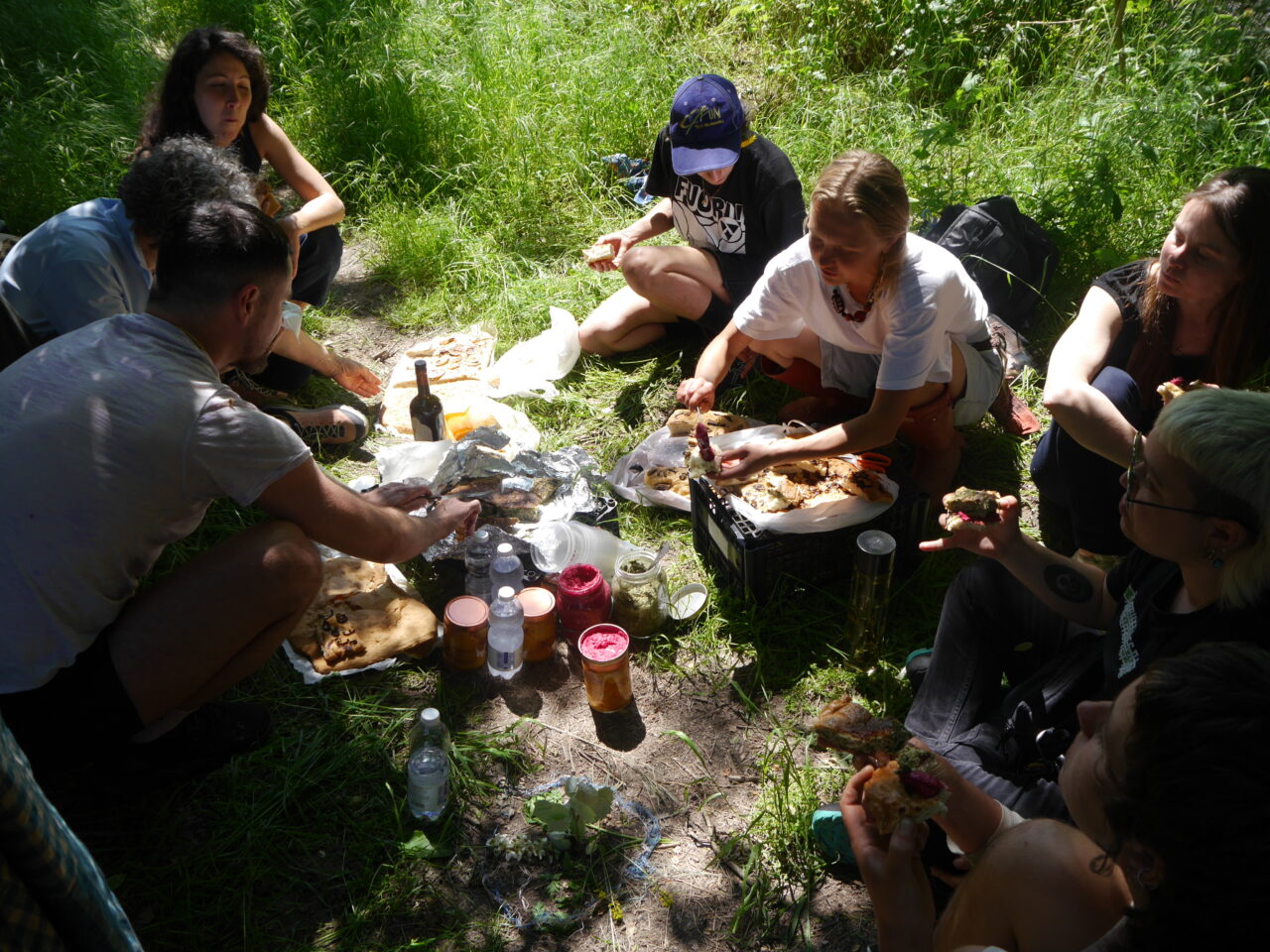
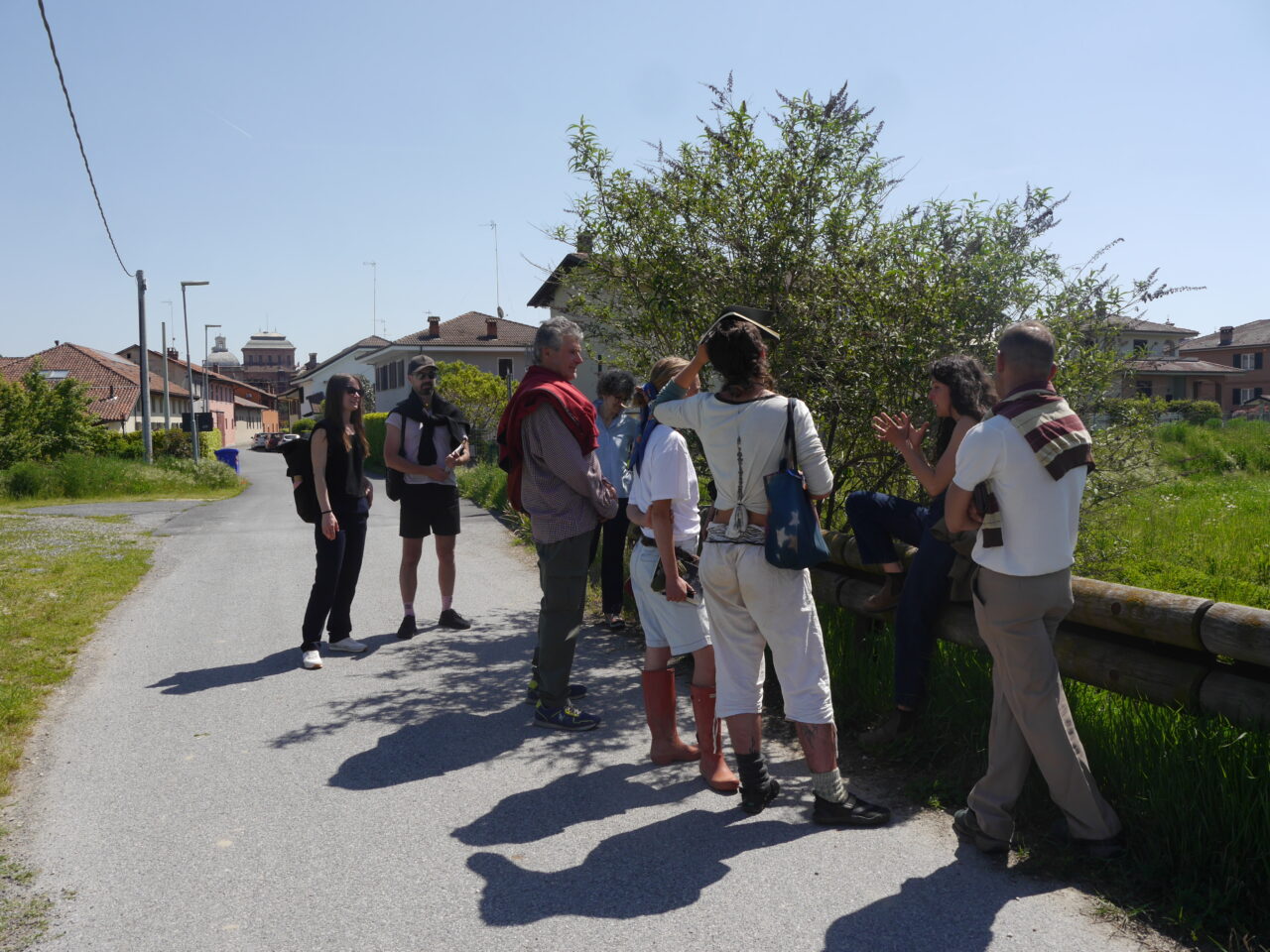
For the following day we had prepared a picnic and met in front of Racconigi Palace for the culminating public event. The PLACE team was joined by some members of the PUSH cooperative and a few locals for a walk guided by Francesca, a local botanist with whom we had collaborated with for the Creative Camp last summer. I was taken by surprise when instead of entering the iconic estate, we headed down the road directly alongside its outer wall, slowly making our way eventually down to a vibrant green spot along the river. Along the way, we paused at all the unexpected edges to notice and share stories about the weeds and wild things we met along the way. Many so-called ‘weeds’ have been erroneously dismissed as being counter-utilitarian but actually have a lot of hidden wisdom and medicine to offer. Nestled within a thicket of primarily ‘invasive’ species that had crept from within the walls of Racconigi towards the wild riverbank, the eleven of us shared a final ritual to celebrate a sense of belonging to the land, along with a delicious homemade meal and a closing circle to highlight and collectively map our shared memories from the day.
While the formal PLACE events had officially concluded, the evening was still before us, and we were all headed into Torino with the possibility to join the ongoing festivities, as it just so happened to be the anniversary of the liberation from Italian fascism! Unfortunately, there wasn’t time that day to visit the community gardening boat that B has built… but in the courtyard of an apartment complex there now lives a beautiful garden in the shape of a pirate boat. It’s a place for folks to play and practice getting their hands dirty, a place for Pirate Gardening and Pirate Care, a place inviting us to already live inside the future we wish to share. By the end of this five-day adventure, I had the felt impression that PLACE was a lot more than a specific project or set of events but seems to have taken on a whole life of its own… offering a special invitation for us to walk a path into unexpected places together with fellow artists, caretakers and place-makers, into the edges and beyond.
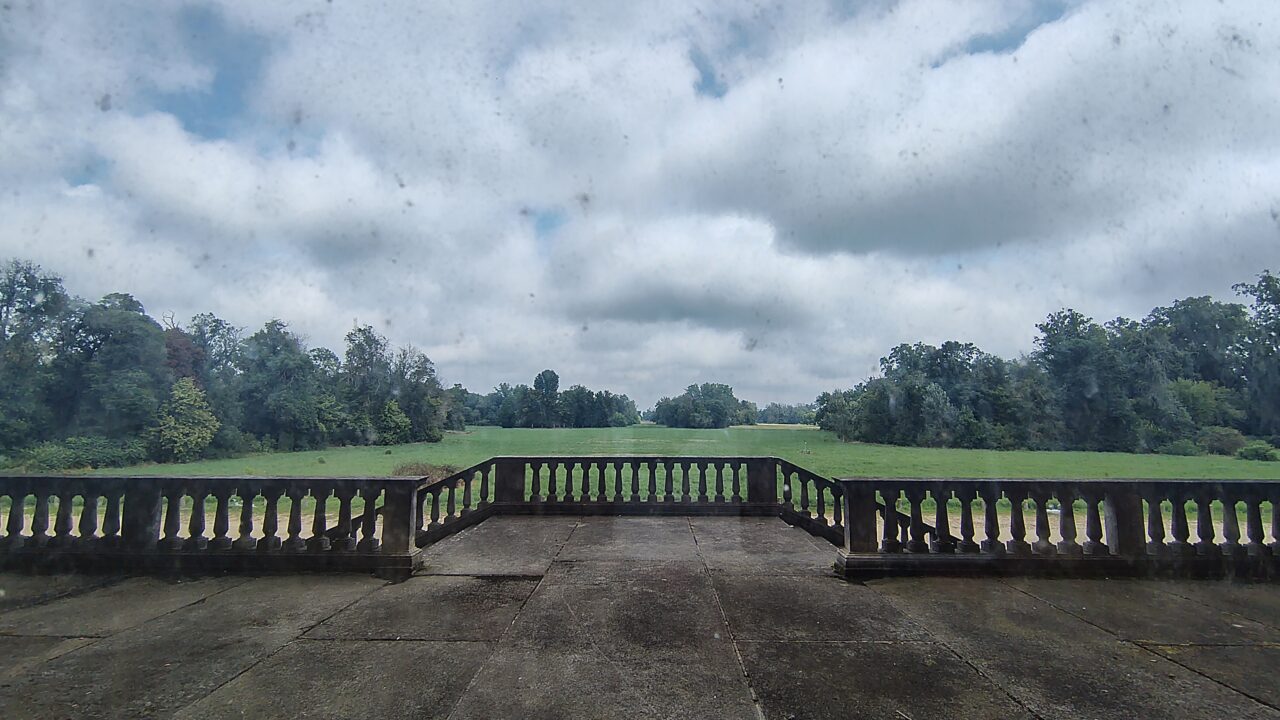
About Rough Weather Network – Parco Castello Racconigi, Racconigi, Italy
Rough Weather Network is the Racconigi pilot of PLACE, developed by B. Bordoni and Nat Skoczylas in collaboration with Norwegian Landscape Theatre (NLT). The project responds to Parco Castello Racconigi not as an empty site to be redesigned, but as a landscape already shaped by multiple histories, regulations and tensions. In the pilot documentation, Racconigi is described as a place where cultural heritage, ecological processes and questions of maintenance meet in a particularly complex way: the park is already regulated as a recreational park, historical site and nature reserve, and the pilot therefore focuses less on proposing new permanent uses than on exploring how these overlapping conditions can be understood, discussed and mobilised through artistic and social practices. Rather the artists has involved themselves in various existing initiatives and used gardening skills as a social practice to connect, share knowledge and ideas.
This orientation explains the specific character of the Racconigi festivity. Rather than centring on spectacle or on a visible physical transformation of the park, Rough Weather Network works through dialogue, exchange, mapping and observation. The mentoring process identified the pilot as one that embeds sustainability in the building of a lasting network, and it stressed the importance of transparent communication with stakeholders and of avoiding promises of easy or “magical” solutions. By building conversations, sharing ideas and initiatives, it seeks to bridge various initiatives and create resilience in staying in the trouble together.